Why Moisture Content Matters
When wood is freshly cut — what foresters call “green” — it can contain over 50% water by weight. Burning wet wood is one of the most common mistakes new stove owners make, and the consequences go beyond poor heat output. Excess moisture means the energy that should be heating your room is instead being used to boil water out of the logs. The result is a cooler fire, more smoke, and significantly more creosote deposited inside your flue.
Creosote is a tar-like substance that accumulates on the inside walls of your chimney. In sufficient quantities, it becomes a serious fire hazard. It is also the primary reason why chimney sweeping is essential — and why burning properly seasoned or kiln-dried wood dramatically reduces the frequency and urgency of that maintenance.
The ‘Ready to Burn’ Standard
In February 2021, the UK government introduced the Air Quality (Domestic Solid Fuels Standards) Regulations, making it a legal requirement for all wood sold in volumes under 2 cubic metres to have a moisture content below 20%. This is the basis of the Woodsure “Ready to Burn” certification scheme.
When you see the Ready to Burn logo on a bag of logs, it means the fuel has been independently tested and certified to contain less than 20% moisture. For kiln-dried hardwood such as oak, ash, or birch, moisture levels are typically between 12% and 18% — well within the safe range for efficient combustion.
Top Tip
Invest in a moisture meter — they cost around £10–£20 and allow you to check any load of logs before burning. Split a log and test the freshly exposed face for the most accurate reading.
Seasoned vs Kiln-Dried: What’s the Difference?
Seasoned wood has been air-dried outdoors, typically for 12 to 24 months, depending on the species and how it has been stored. When done properly in a well-ventilated, covered log store, seasoning is effective and produces good-quality firewood. However, the process is dependent on weather conditions and storage quality, which means moisture content can be inconsistent.
Kiln-dried wood is placed in a commercial drying kiln at controlled temperatures, reducing moisture content to below 20% in a matter of days rather than months. The result is a consistently dry, reliable fuel that produces more heat per log, generates less smoke, and is kinder to your flue lining.
How Fuel Affects Your Stove’s Performance
Modern Ecodesign stoves are engineered to achieve combustion efficiencies of 80% or higher — but only when fuelled correctly. Burning wood with high moisture content forces the stove to work outside its design parameters. The firebox temperature drops, secondary combustion fails to ignite properly, and the glass blackens rapidly with soot deposits.
Conversely, burning quality kiln-dried hardwood at the correct airflow settings means a cleaner glass, a hotter firebox, longer burn times between refuelling, and significantly lower particulate emissions. It is better for your stove, better for your chimney, and better for the air quality in your neighbourhood.

Well-seasoned hardwood produces a cleaner, hotter, and more efficient burn.
Choosing the Right Species
Not all wood is equal when it comes to heat output. Hardwoods such as oak, ash, and beech are denser and produce more sustained heat over a longer period. Softwoods like pine and spruce ignite quickly and are excellent for kindling, but burn faster and produce less heat per volume.
For South Lincolnshire, locally sourced ash and oak are the most common and reliable hardwood choices. Both season well, produce excellent heat, and are widely available from regional suppliers who carry Ready to Burn certification.
Storing Your Wood Properly
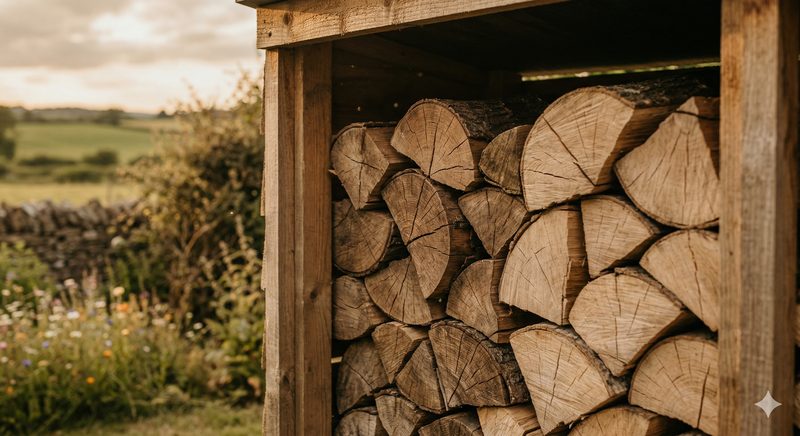
Even kiln-dried logs can reabsorb moisture if stored incorrectly. The key principles are air circulation, a waterproof cover on top, and exposure to wind and sun on the sides. A purpose-built log store with a sloped roof and open sides is ideal. Avoid stacking logs directly against exterior walls, which traps moisture, and never store unseasoned wood indoors — it needs airflow to continue drying.
Important
Never burn treated, painted, or varnished wood in your stove. These materials release toxic chemicals during combustion that are harmful to health and can damage your stove and chimney lining.